
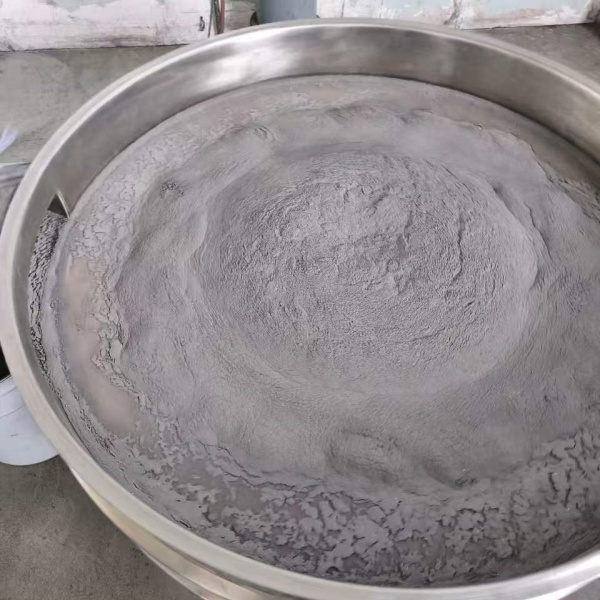
Titanium powder is the fundamental raw material for powder metallurgy, metal injection molding, and additive manufacturing (3D printing). With the increase of market applications, the demand for titanium powder is showing explosive growth. Titanium has excellent ductility and full toughness at room temperature. Directly using mechanical methods to crush and grind it is both laborious and prone to introducing impurities (such as iron contamination), and may also oxidize due to frictional heating.
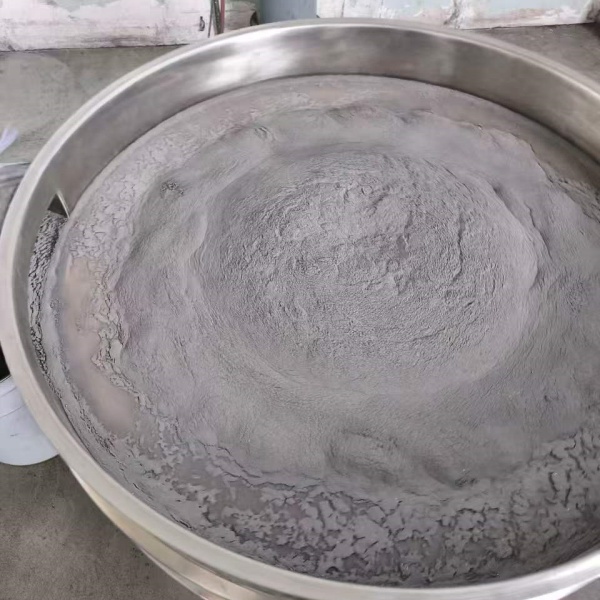
Engineers propose a process of "first embrittlement, then pulverization, and then reduction" based on the physical characteristics of titanium hydrogen absorption (hydrogen embrittlement) - this is the core idea of hydrogenation dehydrogenation method.
The hydrogenation dehydrogenation (HDH) process is roughly divided into three steps:
Hydrogenation (embrittlement) involves placing sponge titanium (or titanium waste, titanium alloy) into a sealed furnace, introducing high-purity hydrogen gas, and heating it to approximately 350-650 ℃. Titanium will absorb a large amount of hydrogen and generate titanium hydride (mainly TiH ₂).
Hydrogen atoms penetrate into the lattice of titanium, causing the material to expand in volume and become extremely brittle in structure - the originally tough titanium instantly becomes a "fragile biscuit". The hydrogen content can reach over 4% (mass fraction), close to theoretical stoichiometry.
Crushed titanium hydride is very brittle and easily crushed into fine powder. The traditional method uses a ball mill. The more advanced approach now is to use a "closed-loop airflow mill" (also known as an airflow crusher).
Dehydrogenation (reduction to pure titanium powder) heats the crushed titanium hydride powder to 600-900 ℃ in high vacuum or inert atmosphere. The hydride decomposes, the hydrogen gas is extracted, and the powder is transformed back into metallic titanium.
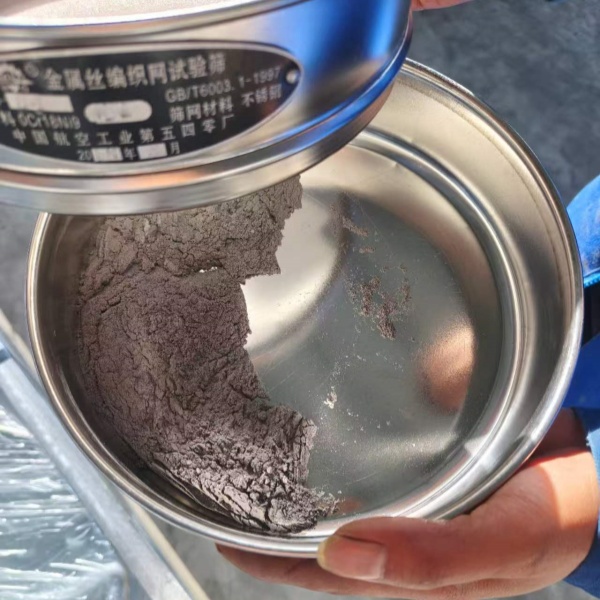
The final obtained titanium powder morphology is mostly irregular titanium powder, so it is also called irregular titanium powder. The oxygen content can be controlled at a low level (high-end products can reach below 0.12%), and the particle size can be adjusted from a few micrometers to several hundred micrometers.
Airflow mill is an upgraded tool in the crushing process of HDH, especially suitable for titanium powder with high purity requirements. Using high-pressure inert gas (argon or nitrogen) to accelerate into a supersonic airflow through a nozzle, driving titanium hydride particles to move at high speed inside the crushing chamber. Intense collisions, friction, and shear occur between particles and between particles and the cavity wall, thereby achieving pulverization. No grinding media such as steel balls, almost zero metal pollution.
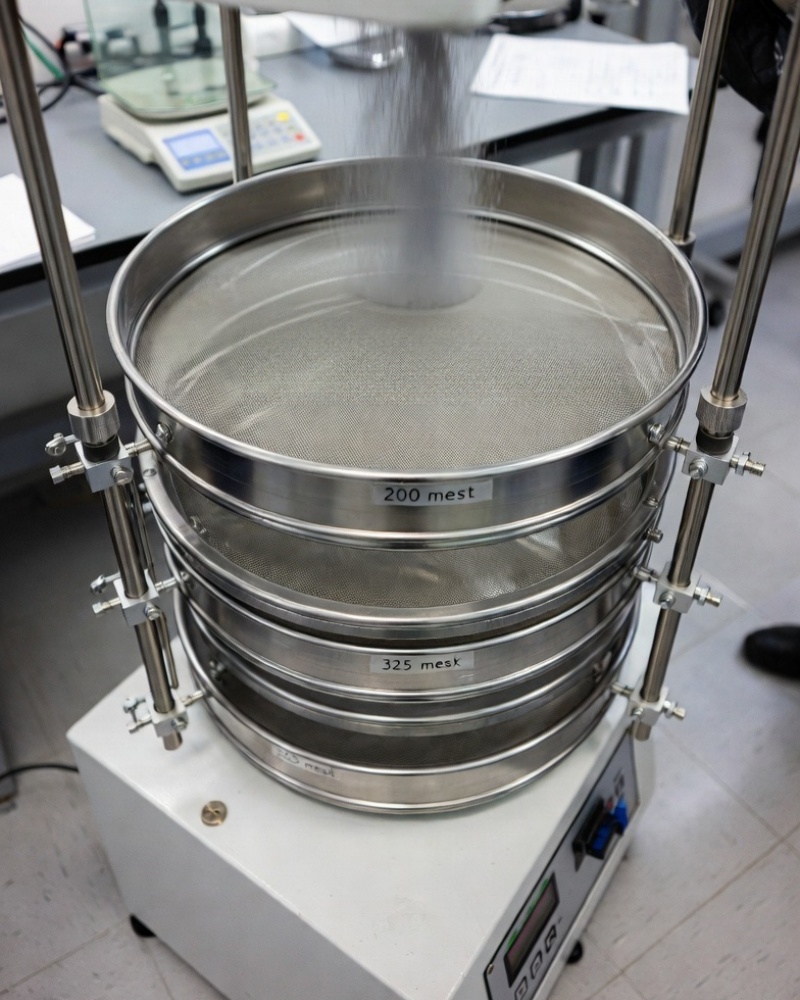
A closed system design is particularly critical: the entire process is protected by inert gas circulation, which not only prevents oxidation but also prevents combustion and explosion (titanium powder is very active, and newly formed surfaces are easily reactive with oxygen). Combined with a high-precision turbine classifier, the particle size distribution can be precisely controlled to obtain a more uniform powder (such as a narrower and more controllable range of 40-400 μ m).
The hydrogenation dehydrogenation process cleverly utilizes the material characteristic of "hydrogen embrittlement" to transform difficult to process titanium into easily broken hydrides, which are then precisely reduced; The airflow mill uses high-speed airflow to achieve "pollution-free crushing". The combination of the two enables titanium powder to move from the laboratory to large-scale industrial applications, supporting the "titanium era" of modern high-end manufacturing.
 +86-0917-3217876
 18292732691
 No. 28, Middle section, Baoti Road, Weibin District, Baoji, Shaanxi
 marketing@ymdtitanium.com
 www.ymdtitanium.com


 English
 简体中文

 18292732691
 marketing@ymdtitanium.com
 zyh2968808781
 +86 18292732691
 .cid.b0f8e930cd0ba28e
