
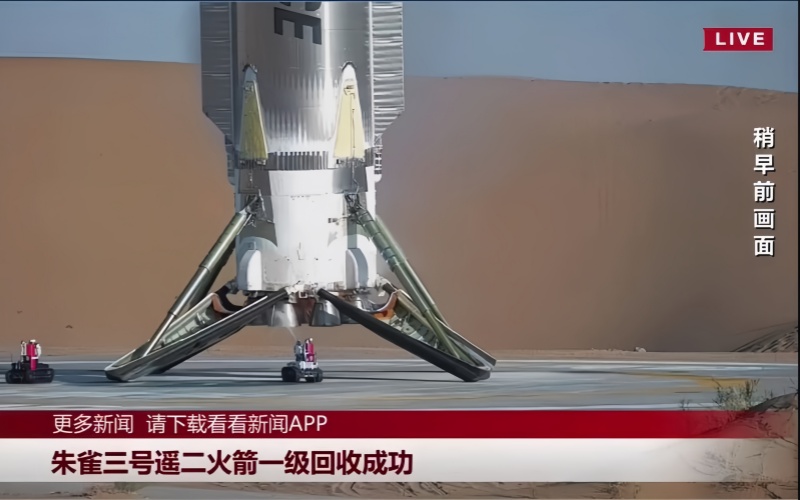
On the morning of August 19, 2026, the globally renowned Jiuquan Dongfeng Commercial Aerospace Innovation Experimental Zone. The Zhuque-3 Yao-2 carrier's first sub stage accurately landed on the landing site in Minqin, Gansu. Four landing legs, which were more than 7 meters long after deployment, stably supported the rocket body, completing China's first vertical recovery of an orbital stage carrier rocket on land.
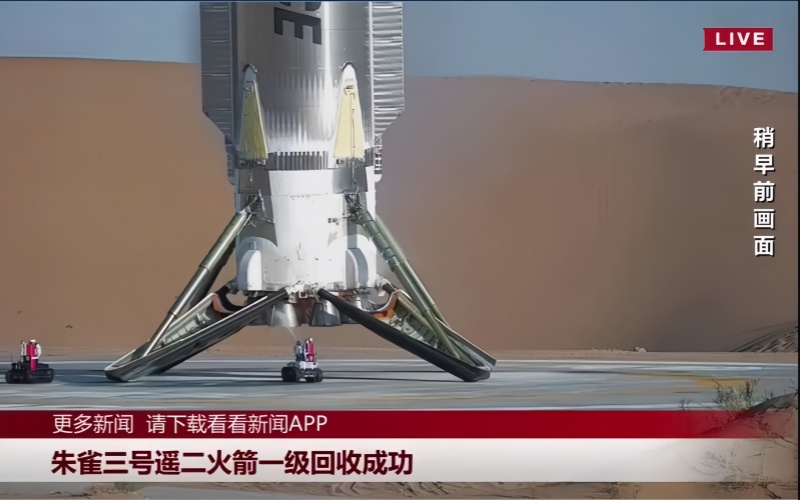
Authoritative reports such as CCTV News repeatedly mention that this landing leg can withstand hundreds of tons of impact, with a total weight controlled within 4 tons and a design that can be reused 20 times. The key lies in the 3D printed titanium alloy joints at the connection between the main and auxiliary legs.
When the first stage of the rocket returns from low Earth orbit, the landing mass is about 40 tons, and the vertical impact load at the moment of contact can reach hundreds of tons. Each leg should be quickly deployed and locked within 10 seconds at a distance of about 70 meters from the ground. Once deployed, if a single leg exceeds 7 meters, the four legs should support a span of nearly 14 meters, ensuring that the engine nozzle is at least two meters above the ground to avoid air recoil and prevent the arrow from overturning.
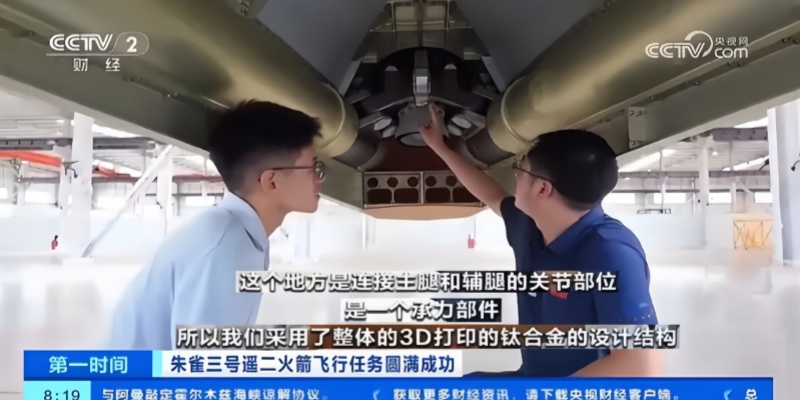
Traditional welded or mechanically connected steel structures are prone to stress concentration points and fatigue crack sources in welds and joints under repeated impacts. Zhuque No. 3 chooses to use integral 3D printing of titanium alloy at the key load-bearing joint connecting the main leg and auxiliary leg.
Titanium alloy itself has high strength, corrosion resistance, and resistance to high and low temperatures, making it very suitable for aerospace environments. 3D printing (metal additive manufacturing) brings three major advantages:
1. Integrated molding, eliminating weak points and complex structures, can be printed in one go without welding seams or a large number of fasteners. The load transmission path is more continuous, and the reliability under repeated impacts is greatly improved, laying the foundation for "reusable 20 times".
2. Topology optimization, on-demand material distribution. The computer "hollows out" non load bearing areas based on force analysis, retaining materials only where they are truly needed. This is difficult to achieve through traditional casting and forging, and directly contributes to a weight reduction of 20% -30%.
3. Rapid iteration and controllable performance of the printing process can accurately control the internal structure, and with subsequent heat treatment, achieve ideal strength and toughness matching. The landing leg system is also equipped with heat-resistant skin, fiberglass insulation layer, etc., which takes into account flight drag reduction, re-entry heat protection, and landing buffering as a whole.
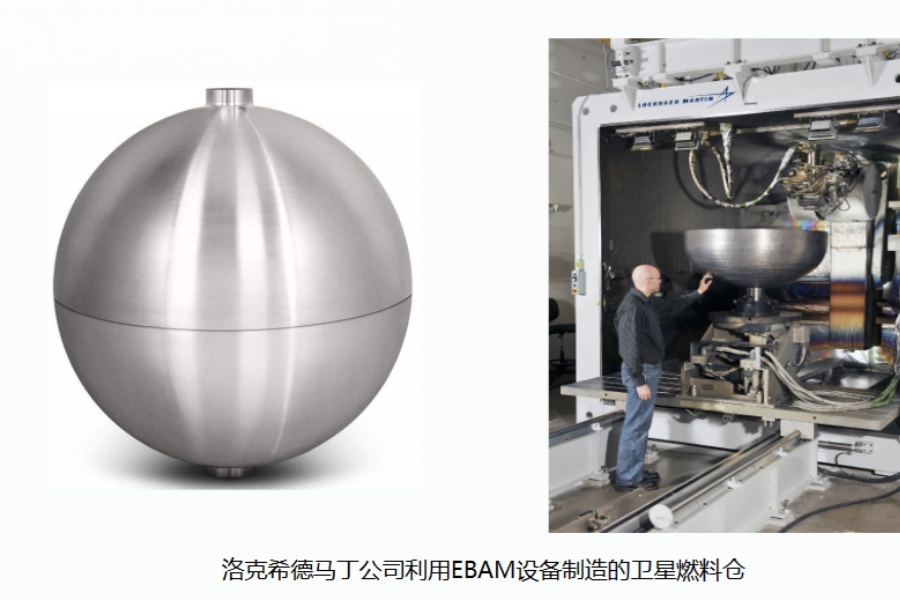
In the CCTV report, the person in charge also explicitly mentioned that the main leg design draws on the landing gear of an aircraft, but adopts a 3D printed titanium alloy integrated structure, which reduces weight by 20% -30% compared to ordinary steel. The total weight of the four sets of legs is controlled within 4 tons, and the design can be reused 20 times. The landing leg is just one part of the Zhuque III recycling system. The landing leg system accounts for about 5% of the rocket manufacturing cost, and after reuse, it can significantly dilute the cost of a single launch.
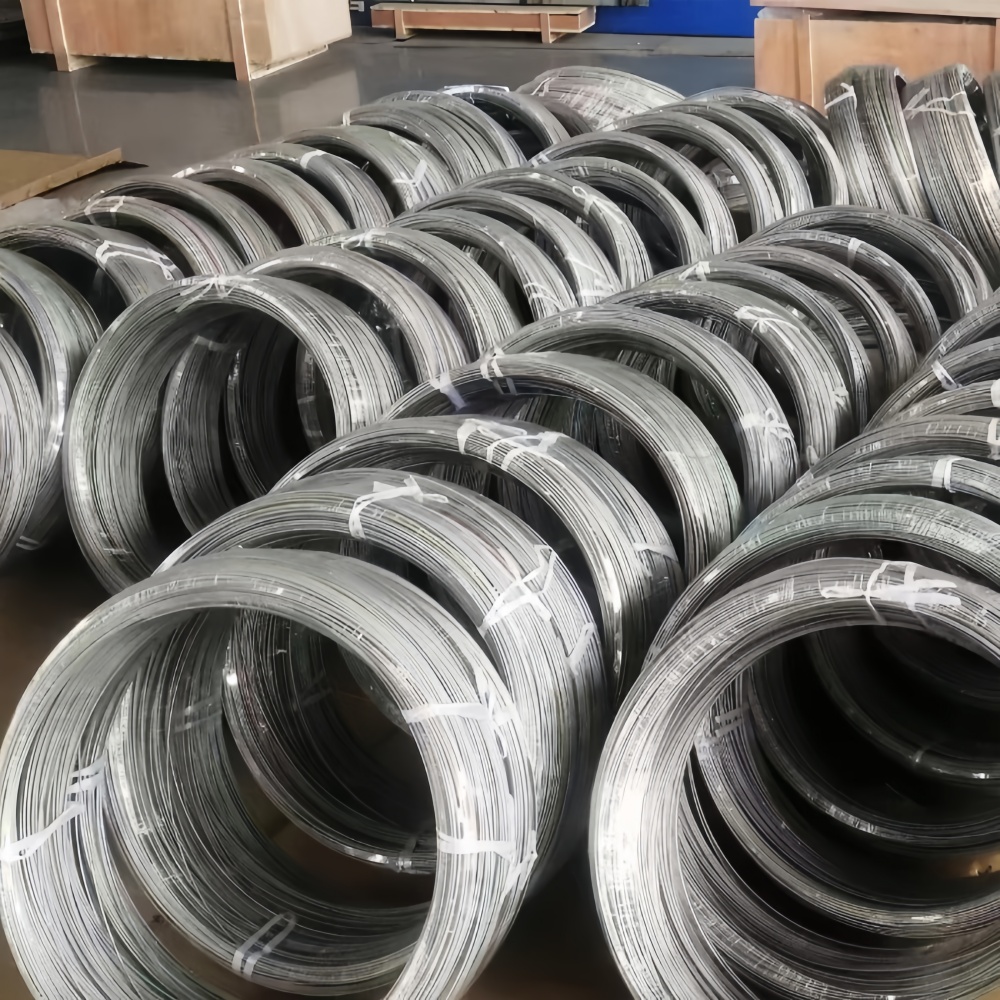
Titanium wire, especially with the rise of 3D printing technology. More than 40% of titanium and titanium alloy wires are used as the main raw materials for 3D printing. We at Yumingda Metal Materials will increase research and development, strictly control quality, and reduce costs and increase efficiency. Develop new grades of titanium wire products and strive to make our company a top tier supplier of titanium and titanium alloy 3D printing wires.
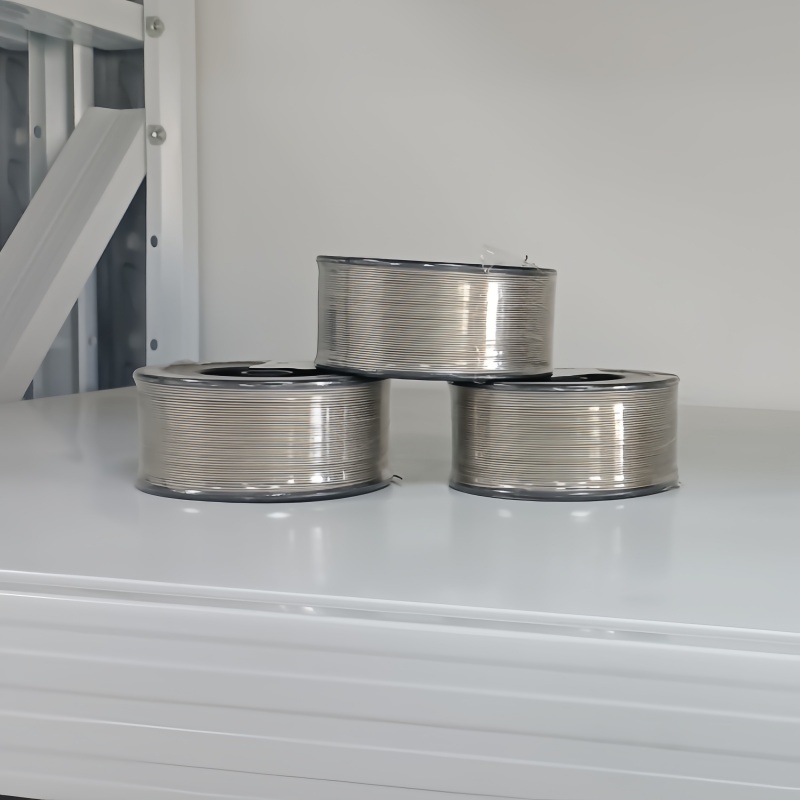
The success of Zhuque III not only verified the land landing and recovery route, but also allowed the public to see it intuitively for the first time. Domestic metal 3D printing has moved from the laboratory to truly capable aerospace key components that can withstand impacts of hundreds of tons. 3D printing titanium alloy is an inevitable choice in engineering reality: under the multiple constraints of extreme lightweight, high reliability, and reusability, traditional processes are approaching their limits, and additive manufacturing provides a new solution. In the future, as the cost of titanium alloy powder decreases, equipment becomes larger, and processes become standardized, similar technologies will increasingly appear in engines, structural components, and even complete machines.
 +86-0917-3217876
 18292732691
 No. 28, Middle section, Baoti Road, Weibin District, Baoji, Shaanxi
 marketing@ymdtitanium.com
 www.ymdtitanium.com


 English
 简体中文
简体中文
 18292732691
 marketing@ymdtitanium.com
 zyh2968808781
 +86 18292732691
 .cid.b0f8e930cd0ba28e
