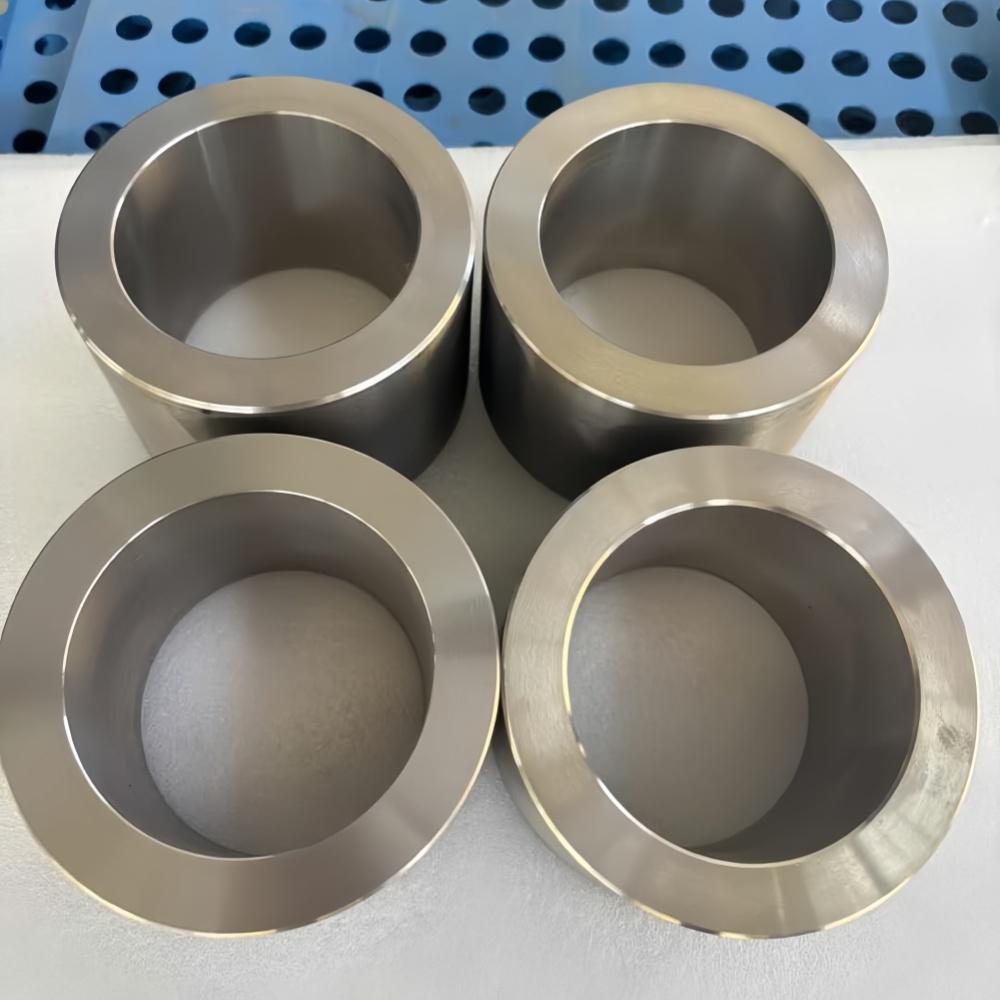
When it comes to titanium rings, one can't help but recall a previous joke: We previously translated titanium rings into English as "titanium ring". Many customers then sent emails to inquire about "titanium finger ring", causing customers to misunderstand the product.
In fact, a titanium ring is a abbreviation. Its full name should be "titanium forged ring", or it can also be called "titanium alloy ring". It refers to ring-shaped components made by forging, ring rolling, and machining processes using industrial pure titanium or titanium alloys.
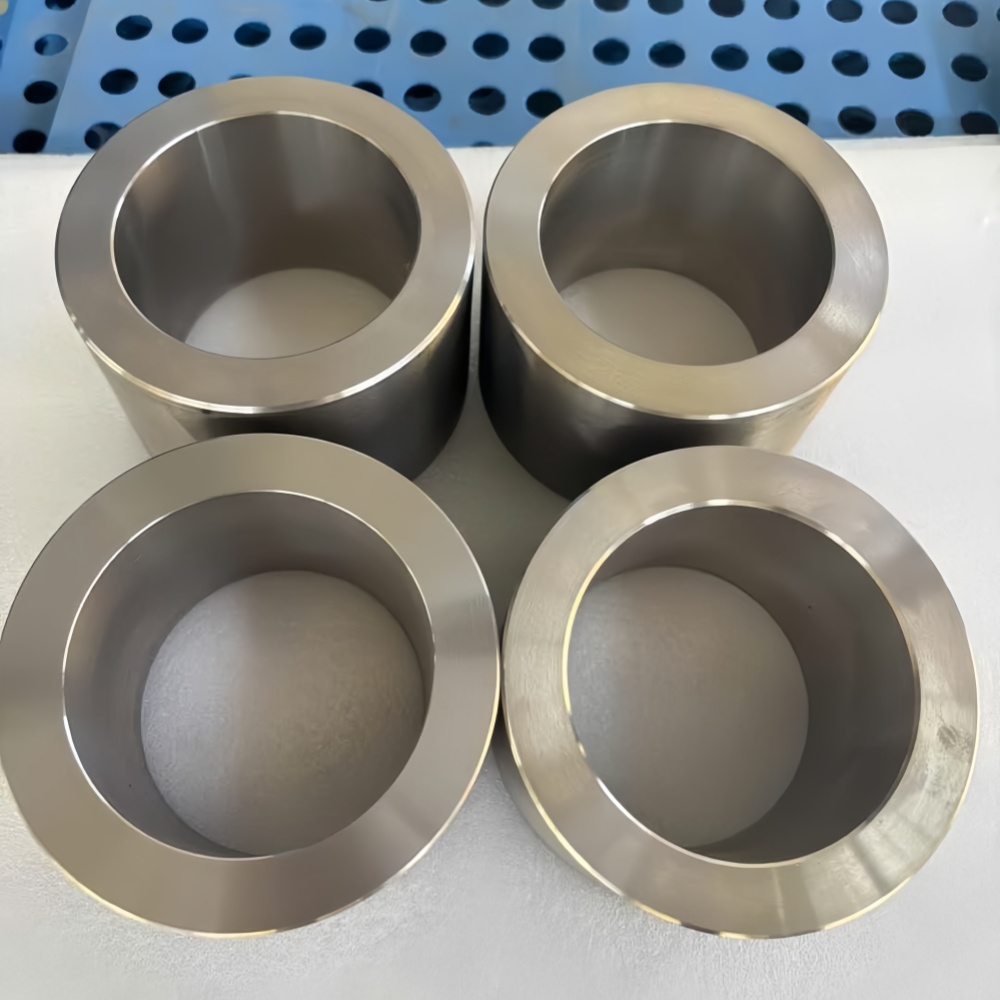
The selection of titanium forging rings depends on the specific working conditions and mainly falls into two categories:
Pure titanium: TA1, TA2, etc., with excellent formability, weldability and corrosion resistance. Especially in media with increasing oxidation strength (TA1 < TA2 < TA3) for shapes of sealing components.
Titanium alloys: TC4 (Ti-6AI-4V) high-strength alloy. While maintaining good corrosion resistance, its strength (>895 MPa) is much higher than that of industrial pure titanium. Its properties can be adjusted through heat treatment, but its weldability is slightly inferior to pure titanium.
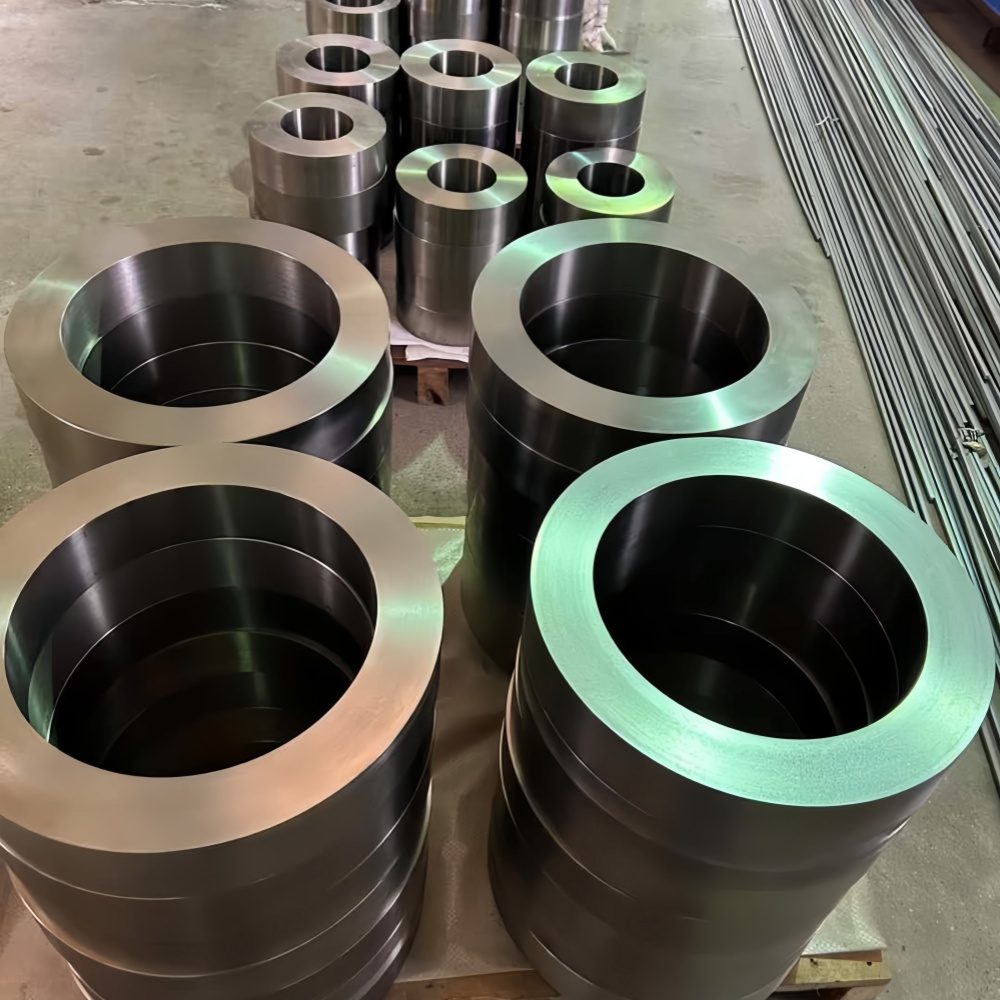
The titanium forged ring has extremely high corrosion resistance and excellent thermal stability:
The surface of the titanium ring forms a 5–20 nm dense TiO₂ passivation film in oxidizing media, remaining stable in the pH range of 1–14. Its corrosion resistance far exceeds that of stainless steel and most other metals.
Good thermal stability: Industrial pure titanium can operate stably at temperatures below 150°C, while TC4 alloy can operate at a long-term temperature of up to 400°C, with even higher peak temperatures for short-term use, meeting the thermal conditions of most chemical processes.
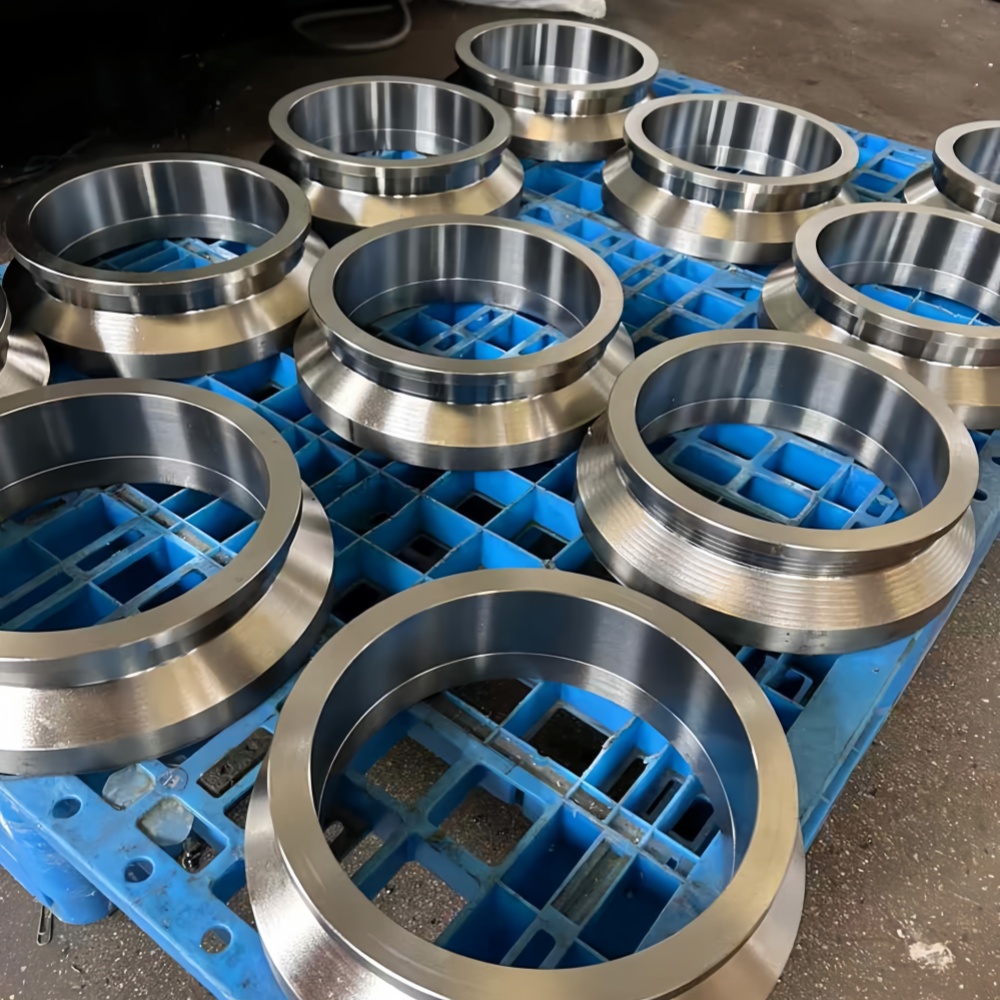
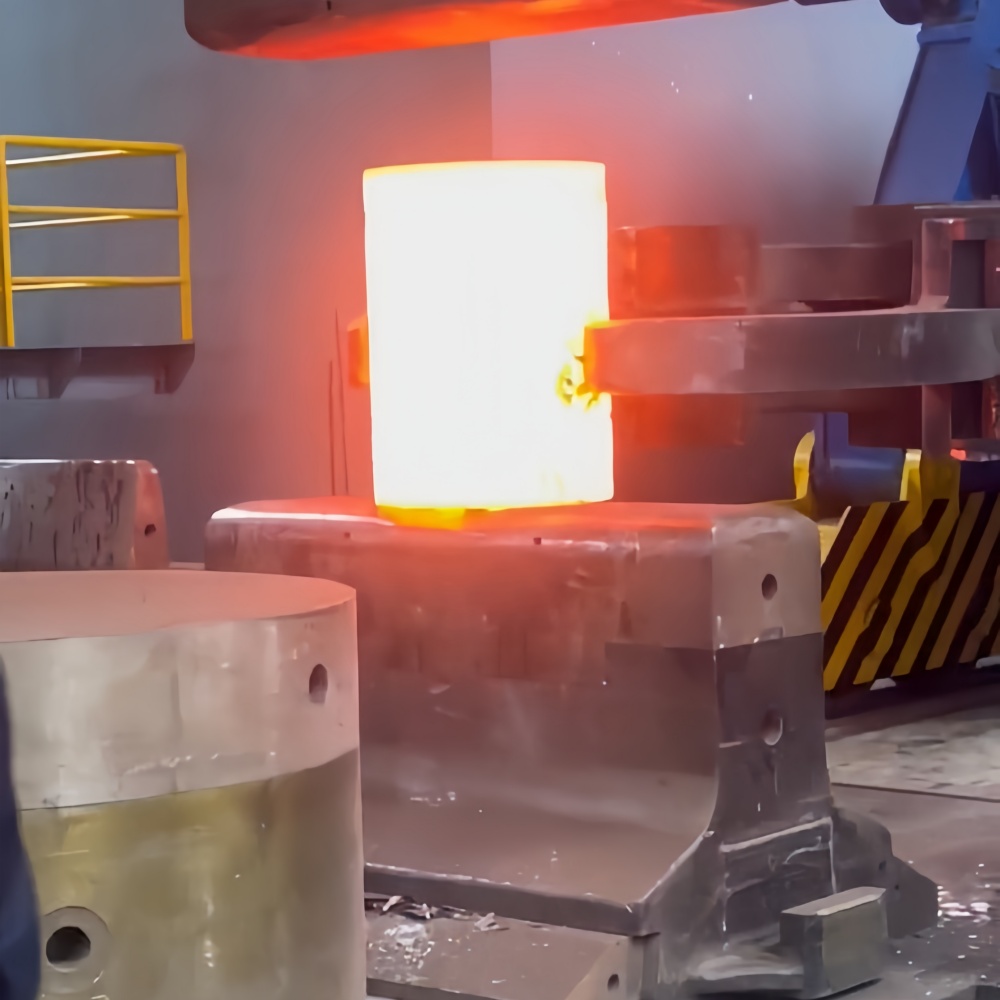
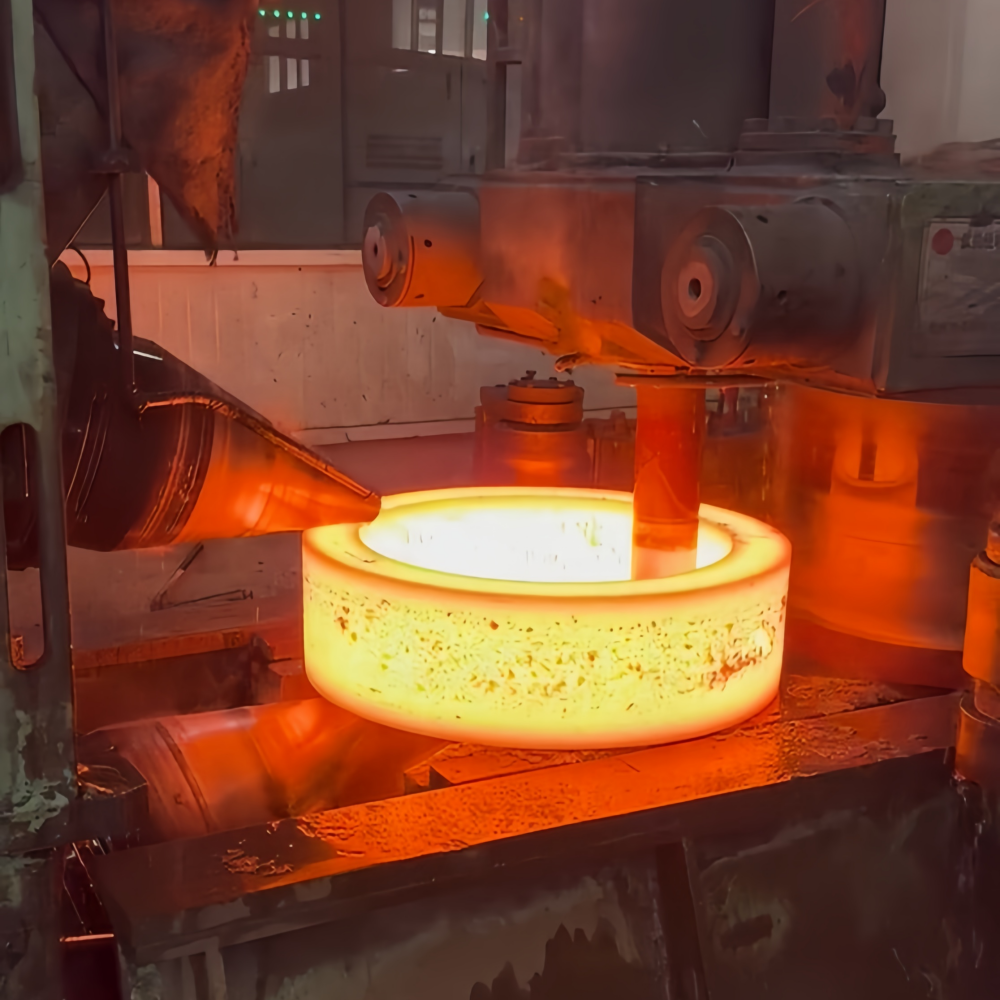
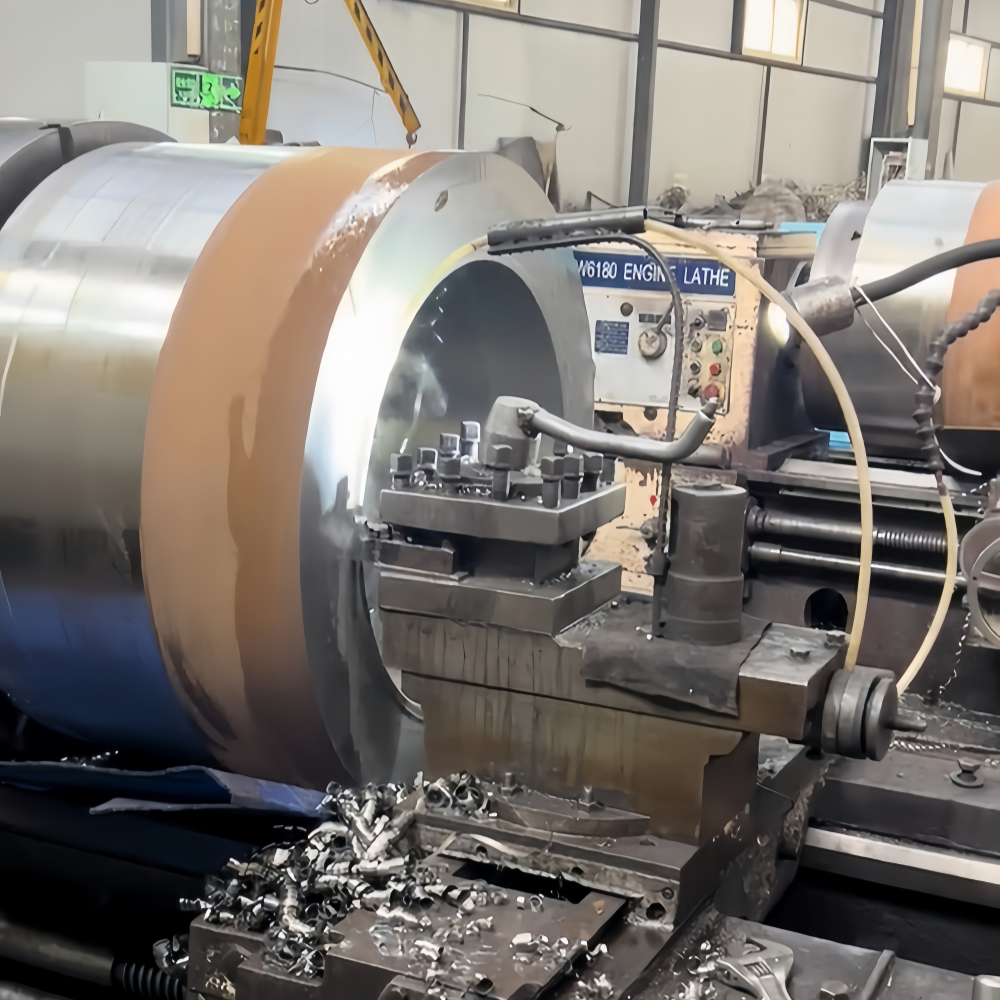
The manufacturing process of titanium rings is a multi-stage and highly precise engineering. It integrates material science, thermodynamic control and precision processing technology. Based on our manufacturing experience of titanium forged rings at Baoji Yumingda Metal Materials Co., Ltd., the core process is: titanium ingot VAR - roughing forging (breaking the cast structure) - blanking (reducing the diameter and punching holes) - ring piece rolling (expanding and forming to obtain a ring shape) - heat treatment (annealing or solution aging) - mechanical processing (machining by turning, drilling, grinding to the final size) - surface treatment (acid washing, passivation) - non-destructive testing and performance inspection.
The production and inspection of titanium rings follow strict standard systems to ensure their quality and reliability. The core standard is "GB/T16598-2013 Titanium and Titanium Alloy Sheets and Rings", which is applicable to hot forging and hot rolling titanium rings.
Inspection requirements for titanium forged rings: 100% full inspection process including non-destructive testing, eddy current testing, ultrasonic testing, etc., to achieve traceability of manufacturing process data.
Microscopic structure and surface quality: No cracks, folds, etc. are allowed, and the surface needs to be ground and chamfered.
Example of marking for titanium forged rings: For instance, a ring made of TC4 in hot processed state, with an outer diameter of 600mm, an inner diameter of 500mm, and a height of 150mm, marked as: Ring TC4R p600/4500x150 GB/T16598.
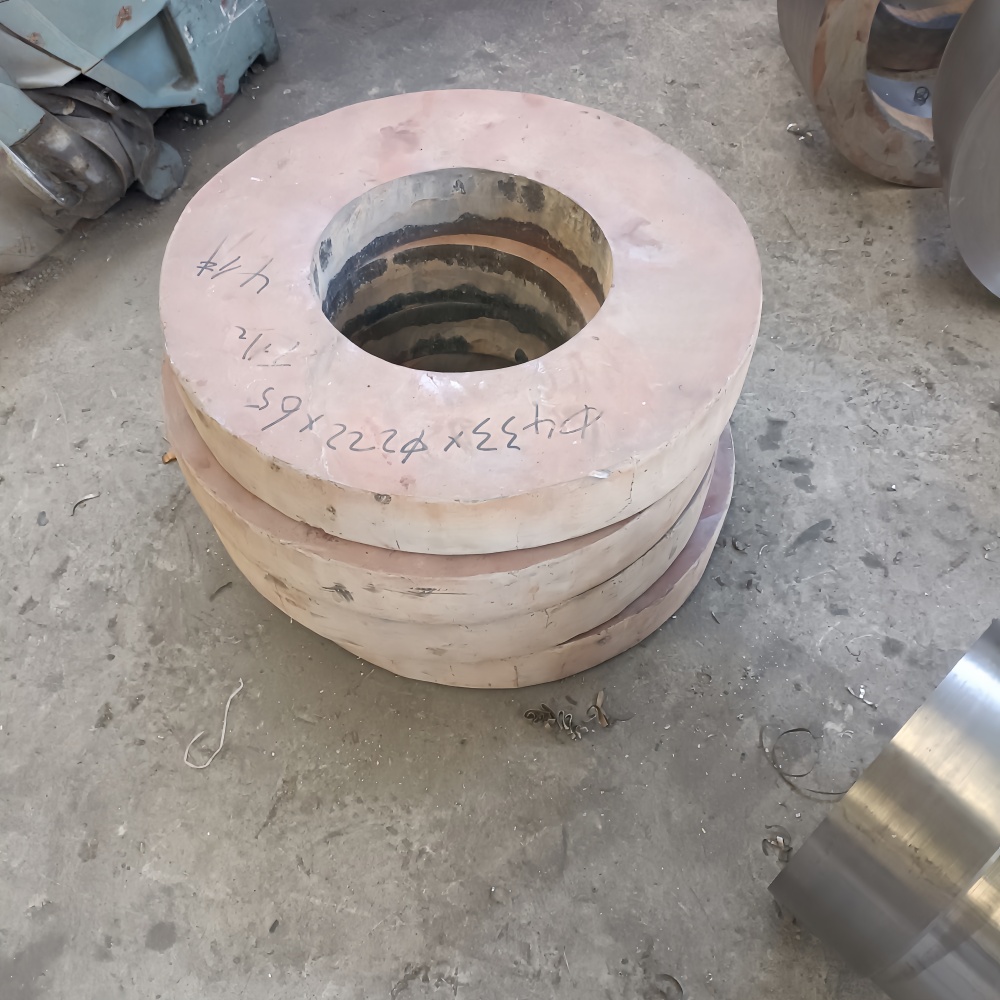
Every step from the design phase to the precise forging on the production line of the titanium alloy ring embodies the craftsmanship of the engineers. In today's era of rapid technological development, the advancement of materials science has never ceased, and the application scope of titanium rings will continue to expand. In the future, with the deep integration of 3D printing technology in the titanium alloy manufacturing field, the customized production of titanium rings will usher in a new leap, being able to meet the personalized needs in more complex working conditions; with the continuous optimization of the surface treatment technology of titanium alloys, their performance will be further enhanced, injecting new vitality into the development of more cutting-edge fields.
 +86-0917-3217876
 18292732691
 No. 28, Middle section, Baoti Road, Weibin District, Baoji, Shaanxi
 marketing@ymdtitanium.com
 www.ymdtitanium.com


 English
 简体中文
简体中文
 18292732691
 marketing@ymdtitanium.com
 zyh2968808781
 +86 18292732691
 .cid.b0f8e930cd0ba28e
